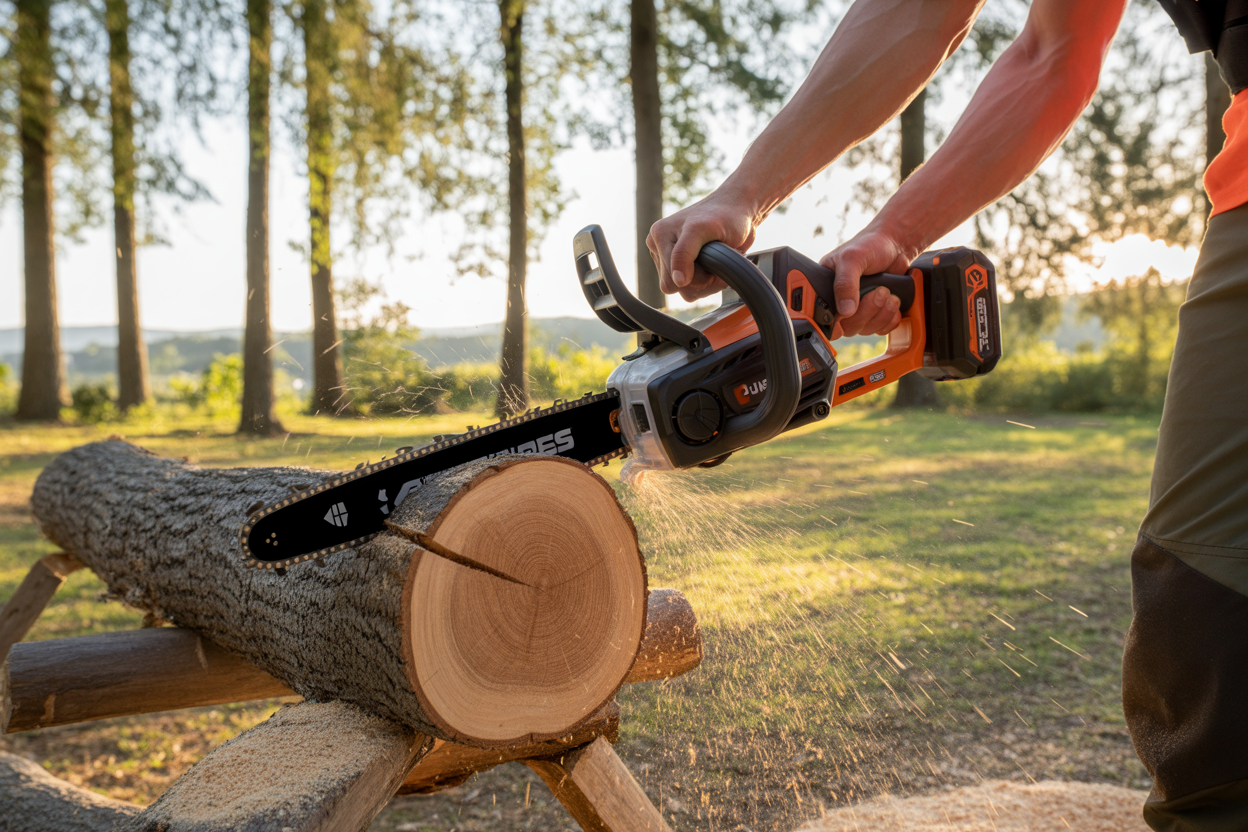
There’s something deeply satisfying about slicing through a log cleanly, quietly, and without the smell of gas in the air. That’s exactly what I felt the first time I used a lithium battery chainsaw1 — no noise, no fumes, just smooth power in my hands.
A lithium battery chainsaw is lightweight, quiet, and easy to maintain compared to gas or corded models. It offers strong cutting performance, quick startup, and cordless freedom, making it ideal for both professionals and home users.
If you’re thinking about switching from a noisy gas chainsaw2 or a restrictive corded one, let me share what I’ve learned — from using, maintaining, and sometimes even fixing these tools myself.
1. Why Choose a Lithium Battery Chainsaw Over Gas or Corded Models
I’ve tried them all — gas, corded, and battery-powered chainsaws. The difference? Night and day.
Lithium battery chainsaws offer portability, lower noise, and easier maintenance compared to gas or corded versions. They start instantly, produce no emissions, and require less upkeep, making them more convenient for both homeowners and professionals.

When I switched from gas to lithium, I realized how much time I’d been wasting just getting ready to work — mixing fuel, pulling cords, checking oil. With a lithium chainsaw, it’s a simple press of a button and I’m off cutting.
Comparing Chainsaw Types
| Feature | Lithium Battery | Gas | Corded Electric |
|---|---|---|---|
| Start-up | Instant | Manual pull | Instant |
| Noise | Low | High | Moderate |
| Maintenance | Minimal | Frequent | Low |
| Mobility | Excellent | Good | Limited |
| Emissions | None | High | None |
Another thing I noticed: lithium chainsaws handle most cutting tasks3 around the garden and workshop with ease. Unless you’re felling massive trees daily, you’ll rarely miss the power of gas.
So yes, it’s cleaner, lighter, and just… easier.
2. Step-by-Step Guide: How to Safely Operate Your Cordless Chainsaw
Before you even hit the power button, there’s a little routine I always follow — and it’s saved me from a few close calls.
To use a cordless chainsaw safely, check the chain tension, battery charge, and safety lock first. Always wear gloves and goggles, maintain a stable stance, and cut with both hands on the handle. Release the trigger immediately after finishing each cut.
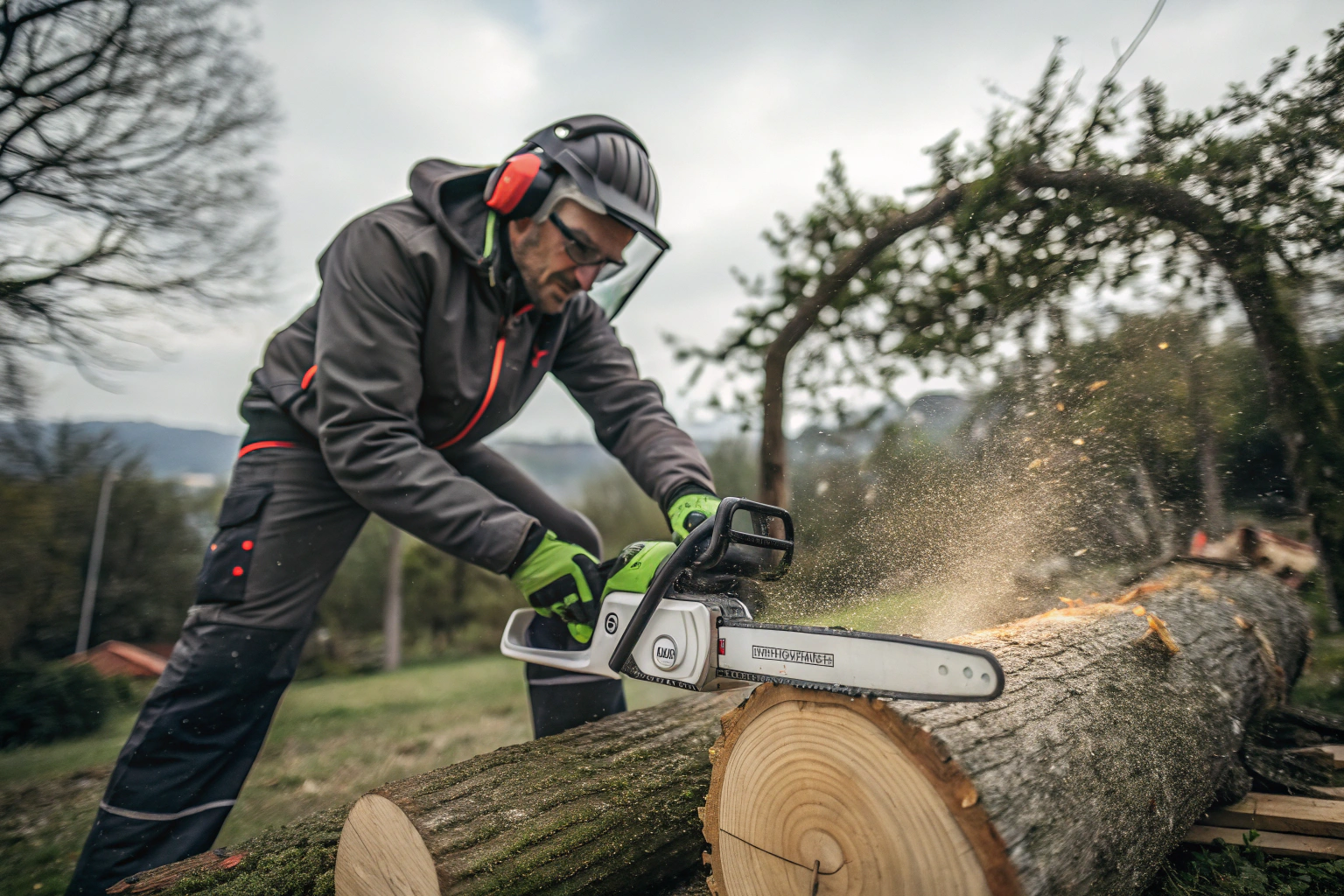
Here’s how I usually run through my pre-cut checklist:
Step-by-Step Operation
- Inspect the Chain and Bar – Make sure the chain is tight but moves freely.
- Check the Battery – Fully charged means consistent cutting power.
- Wear Safety Gear – Gloves, boots, goggles, and ear protection.
- Grip Firmly – Use both hands, keep your thumbs wrapped around the handles.
- Start Cutting – Hold the trigger, let the chain reach full speed before touching wood.
- Release Gently – Once done, release the trigger and let the chain stop before moving.
Safety sounds boring, I know. But once, I skipped checking the chain tension4 — it slipped mid-cut and nearly hit my glove. Lesson learned: five minutes of checking can save a lot of pain.
For more on proper setup, see Chainsaw Safety Basics.
3. Essential Maintenance Tips to Keep Your Chainsaw Running Smoothly
If you want your chainsaw to last years instead of months, maintenance isn’t optional — it’s survival.
Regularly clean the chain and bar, check oil levels, tighten bolts, and store the battery properly. Sharpen the chain after every few hours of cutting and avoid storing the chainsaw in extreme temperatures.
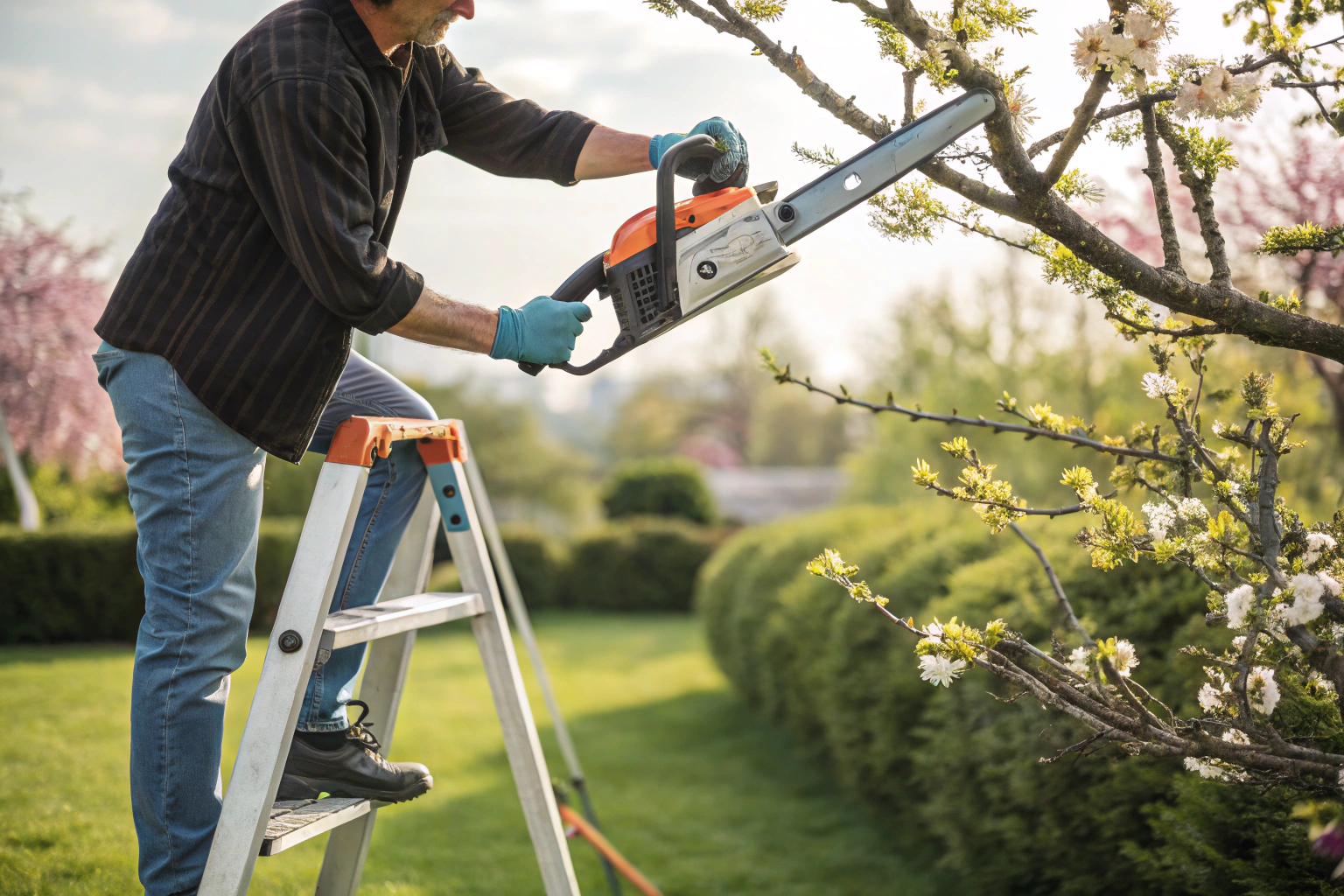
I treat my chainsaw like I do my car — take care of it, and it’ll take care of me.
Here’s my simple upkeep routine:
| Maintenance Task | Frequency | Why It Matters |
|---|---|---|
| Clean chain and bar | After each use | Prevents clogging and wear |
| Sharpen chain | Every 2–3 hours of use | Ensures smooth cuts |
| Check oil and bolts | Weekly | Keeps parts running safely |
| Charge and store battery | After use | Extends battery life |
A little story — once I ignored cleaning the bar groove, and sap built up like glue. The next time I used it, the chain jammed halfway through a cut. Now, I never skip cleaning again.
Keep your tool dry, avoid moisture, and store the battery indoors. Lithium batteries hate heat and cold extremes.
If you’re curious about long-term care5, you can read my detailed note here: Battery Tool Maintenance Guide.
4. Common Mistakes to Avoid When Using a Battery-Powered Chainsaw
We’ve all done something careless once or twice — like forcing a dull chain through thick wood or leaving the battery in the sun. It happens.
Common mistakes include using a dull chain, overcharging the battery, forcing cuts, or ignoring regular cleaning. Avoid these to maintain efficiency, safety, and extend the lifespan of your chainsaw.
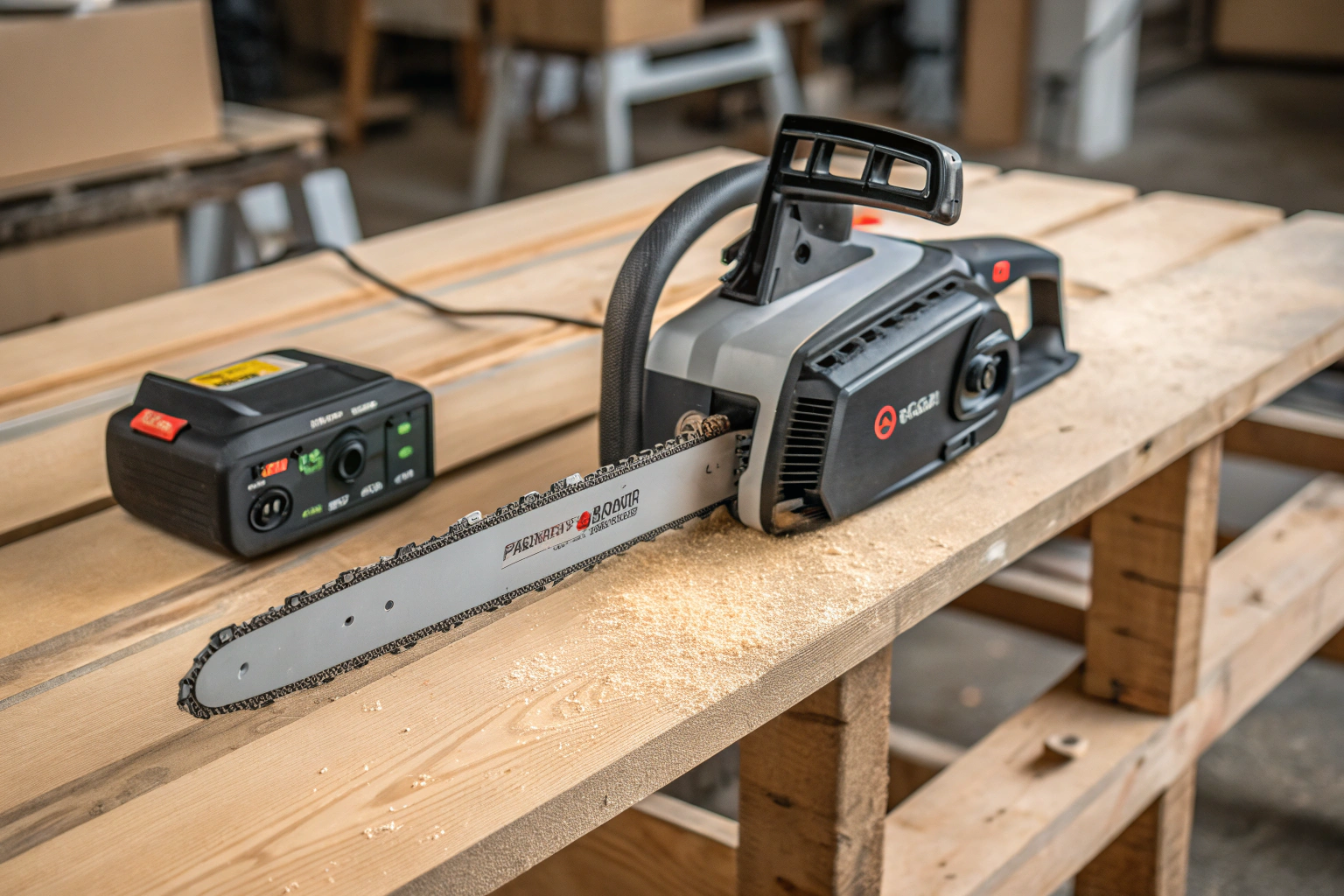
Frequent Missteps (and What I Learned)
| Mistake | Why It’s a Problem |
|---|---|
| Overcharging the battery | Reduces overall battery lifespan |
| Cutting with a dull chain | Causes motor strain and poor results |
| Forgetting chain lubrication | Leads to friction and heat damage |
| Using the wrong oil | Can shorten bar and chain life |
| Storing with full battery | Affects long-term battery performance |
I once left my battery charging overnight after a long day — the next morning, it overheated slightly. Luckily, no damage, but it could’ve been worse. Since then, I use a timer plug.
Lithium tools are smart, but they still rely on our smart habits to last.
Conclusion
Lithium chainsaws combine simplicity, strength, and sustainability — perfect for daily cutting tasks3 without the mess of gas or cords.
If you treat it well, it’ll serve you faithfully for years.
If you have any interest, please contact: [email protected]
-
Explore the advantages of lithium battery chainsaws for a cleaner, quieter cutting experience. ↩
-
Explore this resource to understand how lithium chainsaws outperform gas models in noise, maintenance, and portability. ↩
-
Find out the various cutting tasks that lithium battery chainsaws excel at. ↩ ↩
-
Discover the importance of checking chain tension for safe and efficient cutting. ↩
-
Learn best practices for maintaining lithium battery tools for longevity and performance. ↩